To open these settings, click the gear icon at the top right, then the Invoices, Estimates & Receipts tab. The gear icon only shows for users with access to Settings. Changes save as you make them.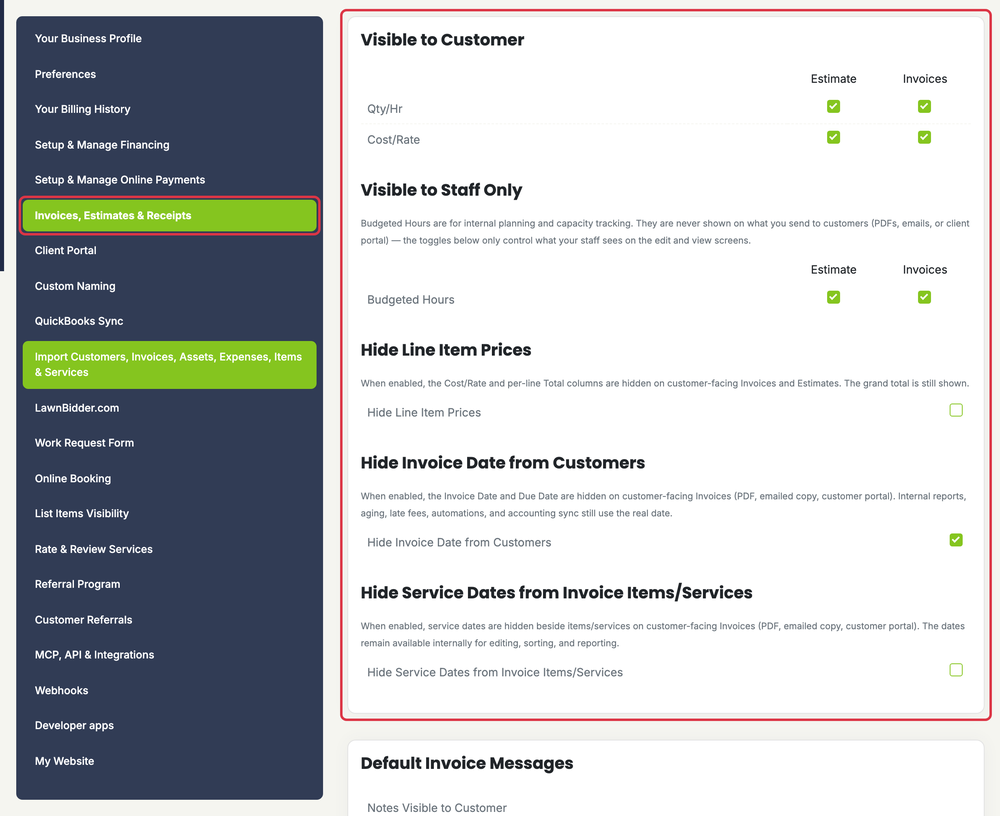
What customers see on line items
- Visible to Customer: choose whether customers see the Qty/Hr and Cost/Rate columns on estimates and invoices.
- Budgeted Hours (Visible to Staff Only): shows budgeted hours on your side. They’re never shown to customers on PDFs, emails or the portal.
- Hide Line Item Prices: hides the Cost/Rate and per-line Total columns on customer-facing invoices and estimates. The grand total still shows.
- Hide Invoice Date from Customers: hides the invoice date and due date on customer-facing invoices.
- Hide Service Dates from Invoice Items/Services: hides the service date next to each item on customer-facing invoices.
Default Invoice Messages
Notes Visible to Customer and Terms (for example, “Please pay within 15 days”) appear on every new invoice. Click Update Notes to save. To use different invoice notes or terms for one customer, set Default Notes on Invoices and Default Terms on Invoices on that customer’s profile.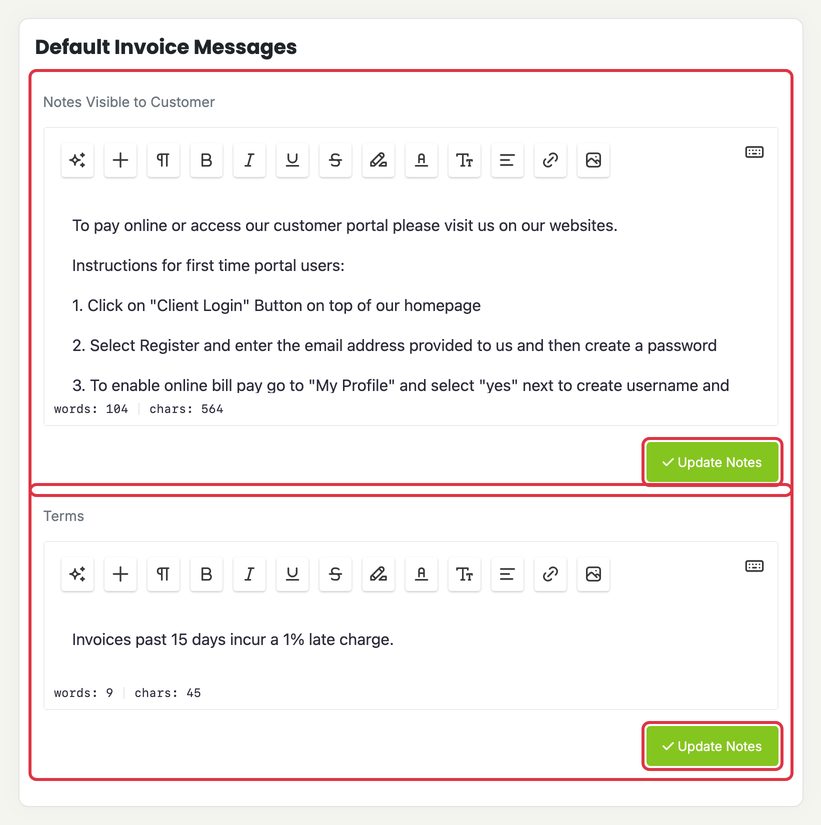
Default Estimate Messages
Notes and terms added to every new estimate. There’s no per-customer override for estimate notes or terms.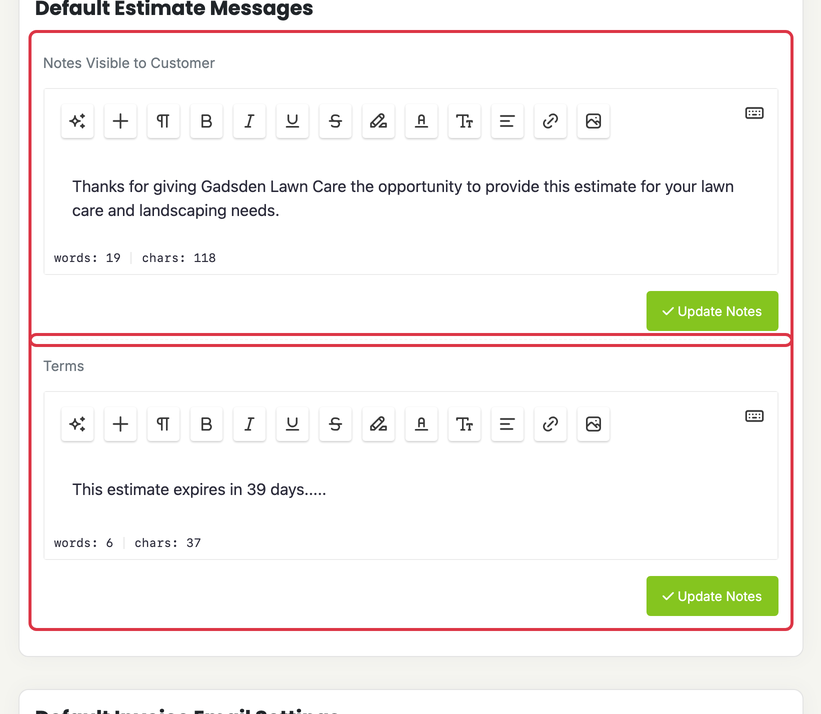
Default Invoice Email Settings
Default Invoice Email Template is the template used when you email an invoice. Check Attach PDF of Invoice to Email to attach a PDF copy.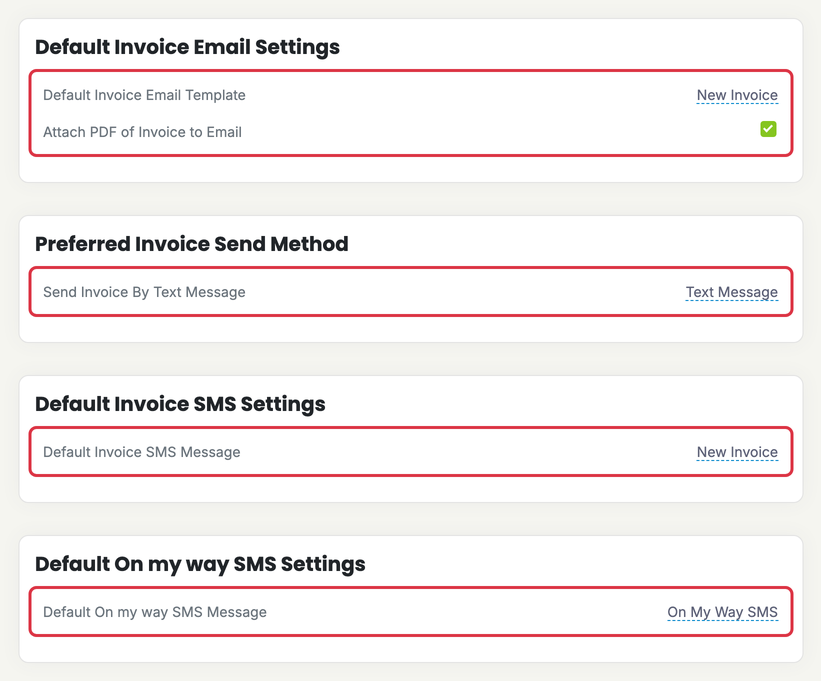
Preferred Invoice Send Method
None, Email, Regular Mail or Text Message. This is the method used when invoices are sent automatically.
Default Invoice SMS Settings
The text template used when you text an invoice.
Default On my way SMS Settings
The text template used for On My Way texts.
Default Estimate Email Settings
The default estimate email template, and whether to attach a PDF.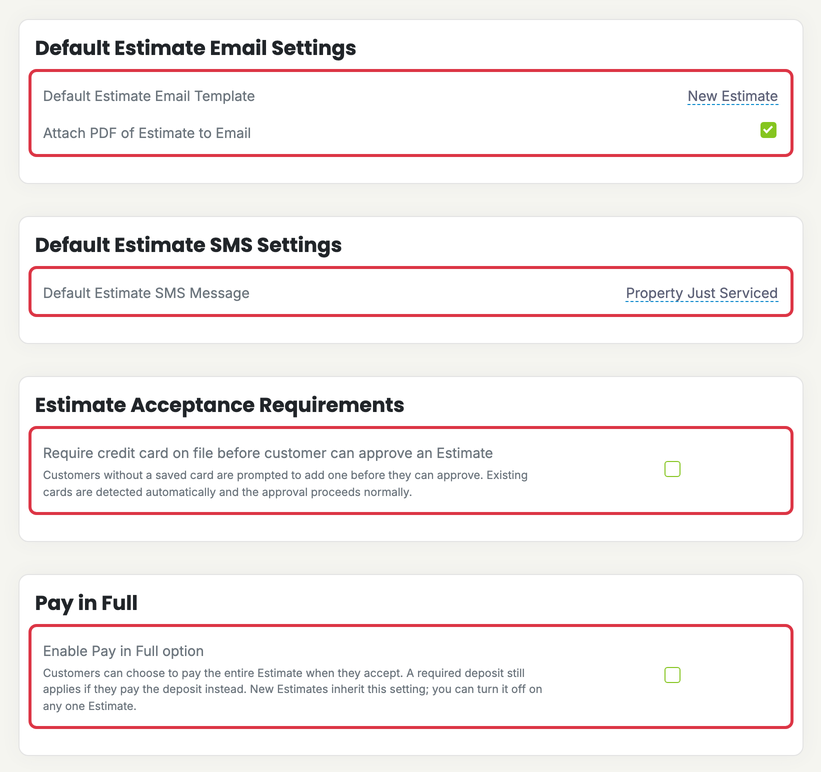
Default Estimate SMS Settings
The text template used when you text an estimate.
Estimate Acceptance Requirements and Pay in Full
These are two separate sections. They appear once online payments are connected.
- Require credit card on file before customer can approve an estimate: customers without a saved card are asked to add one before they can approve.
- Enable Pay in Full option: customers can pay the whole estimate when they accept. If a deposit is required, they can still pay just the deposit.
Default Receipt Email Settings
The default receipt email template, and whether to attach a PDF.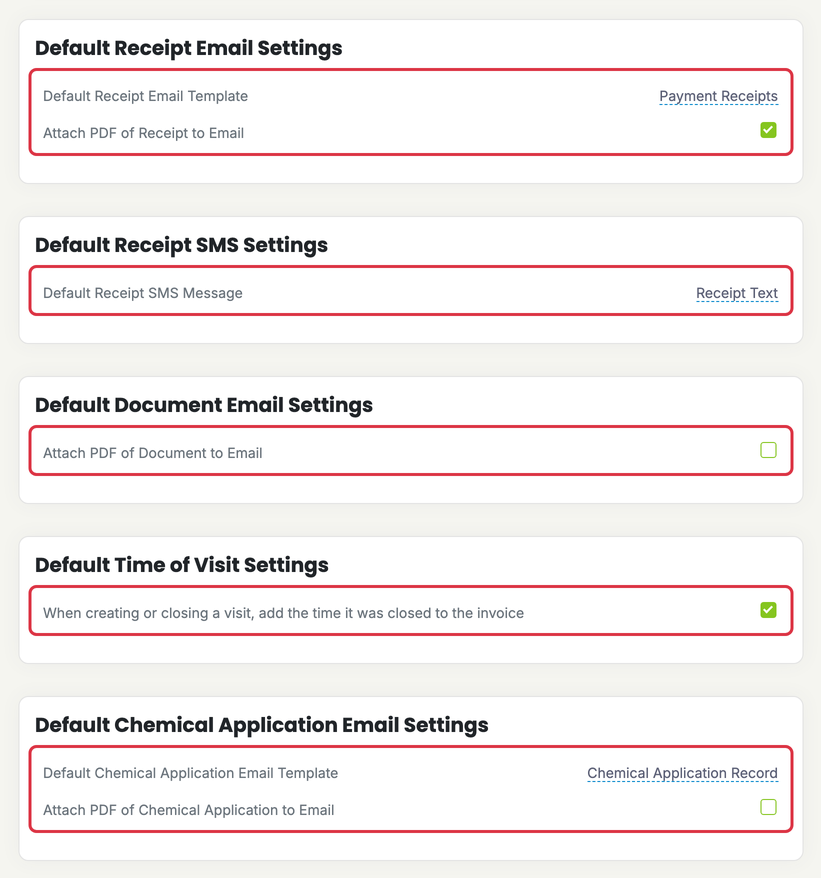
Default Receipt SMS Settings
The text template used when you text a receipt.
Default Document Email Settings
Whether to attach a PDF when you email a document.
Default Time of Visit Settings
When creating or closing a visit, add the time it was closed to the invoice.
Default Chemical Application Email Settings
The default email template for chemical applications, and whether to attach a PDF.
Invoice Address Settings
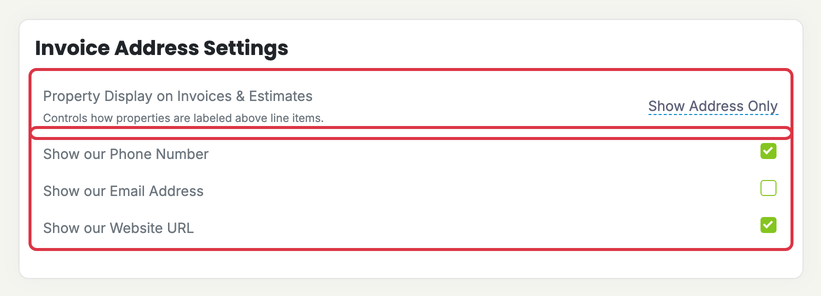
- Property Display on Invoices & Estimates: Show Address Only or Show Property Name and Address above the line items.
- Show our Phone Number, Show our Email Address, Show our Website URL: show your contact details on invoices.
Invoice Settings
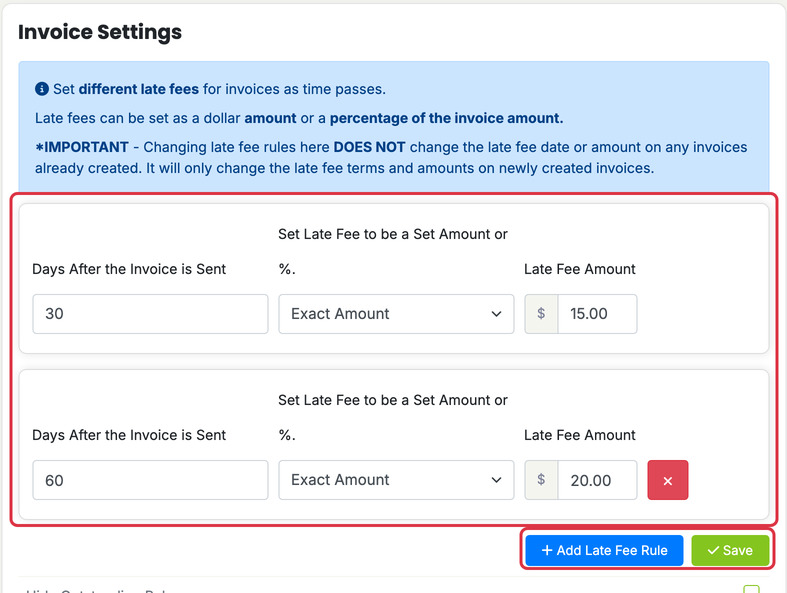
- Late fee rules: add rules for how many days after the invoice is sent a late fee applies, and whether it’s a set amount or a percentage, for example $5 after 15 days and $10 after 30. Click Add Late Fee Rule for more, then Save. Changing the rules only affects new invoices. Individual customers can have their own rules on their Late Fee Settings tab.
- Hide Outstanding Balance: hides the outstanding balance on invoices.
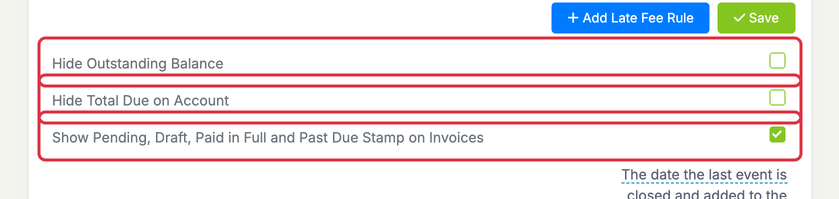
- Hide Total Due on Account: hides the customer’s total account balance on invoices.
- Show Pending, Draft, Paid in Full and Past Due Stamp on Invoices
- Default Invoice Date: the date an invoice gets. Your late fee countdown also starts from this date, so if you choose the date it’s sent, resending the invoice restarts the countdown. Options: The date the invoice is sent; The date the last event is closed and added to the invoice before the invoice is sent; The invoice date is not changed.
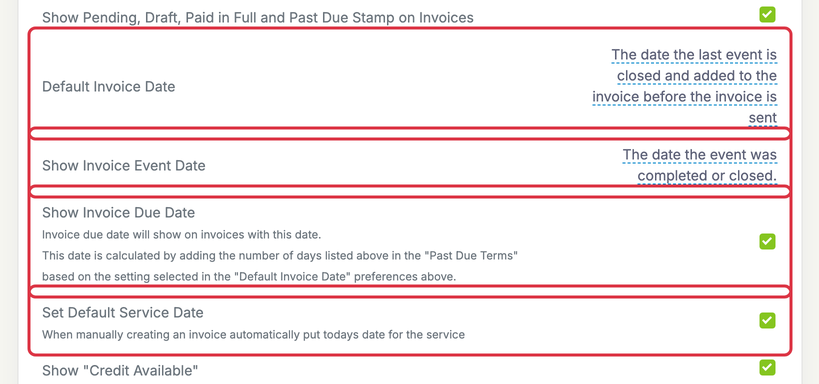
- Show Invoice Event Date: the service date shown for each visit. Options: The date the event was scheduled; The date the event was completed or closed; Let me choose the visit date at the time I am closing the event if it is different than the scheduled date.
- Show Invoice Due Date: shows the due date on invoices.
- Set Default Service Date: when you create an invoice by hand, fills in today’s date as the service date.
- Show “Credit Available”: shows the customer’s available credit on invoices.
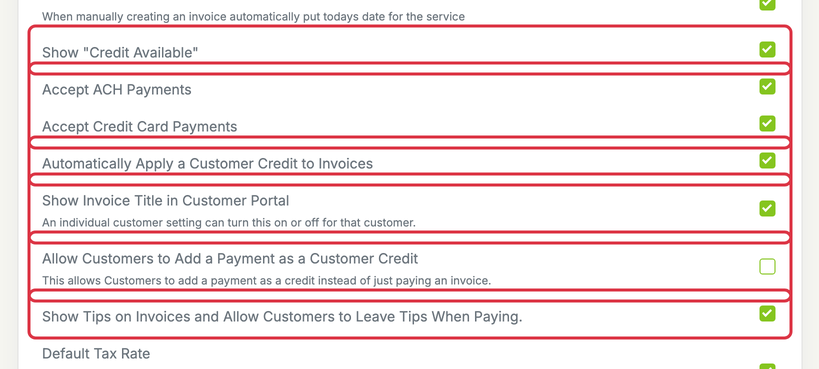
- Accept ACH Payments and Accept Credit Card Payments: turn each online payment type on or off.
- Automatically Apply a Customer Credit to Invoices: applies available credit to new invoices. The invoice must be sent, or marked sent, first.
- Show Invoice Title in Customer Portal: a customer’s own setting can override this.
- Allow Customers to Add a Payment as a Customer Credit: lets customers pay toward a credit balance instead of a specific invoice.
- Show Tips on Invoices and Allow Customers to Leave Tips When Paying: included on Startup and higher.
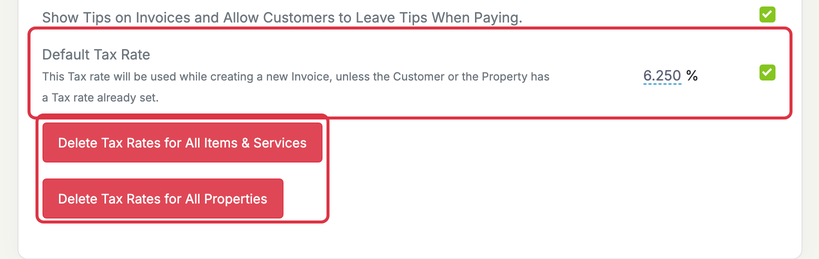
- Default Tax Rate: enter the rate and check the box beside it to turn it on. It’s used on new invoices unless the customer or property has its own rate. The red buttons, Delete Tax Rates for All Items & Services and Delete Tax Rates for All Properties, clear those rates in bulk. See Setting a Tax Rate on an Item or Service for the order LawnPro uses.
Service Suspension
- Automatically Suspend Service for Past Due Customers: when a customer has a past due invoice older than the number of days you set, their recurring visits pause and upcoming visits are hidden from the schedule until they’re current. You can also suspend or reinstate a customer by hand from their profile.
- Suspend When Past Due Invoice is This Many Days Old
- Automatically Reinstate Service When Account is Current: brings automatically suspended customers back once their past due invoices are paid. Customers you suspended by hand are never reinstated automatically.
- Keep Past Visits Visible on the Schedule: past visits stay visible while a customer is suspended.