To add an expense, go to Finances > Expenses.
Next, click the green “+ New Expense” button. You will have the option to add a new expense or import a .CSV file.

On this page, you will fill out the details of the expense.
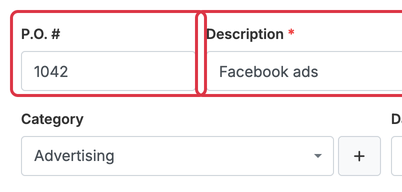
First, add a P.O. # if applicable and a description so you know what the expense is for.
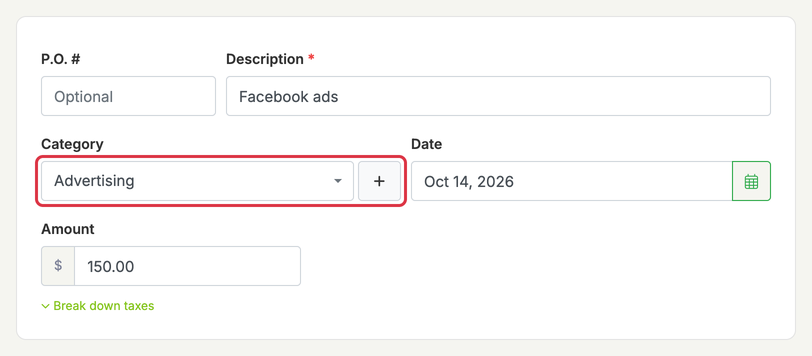
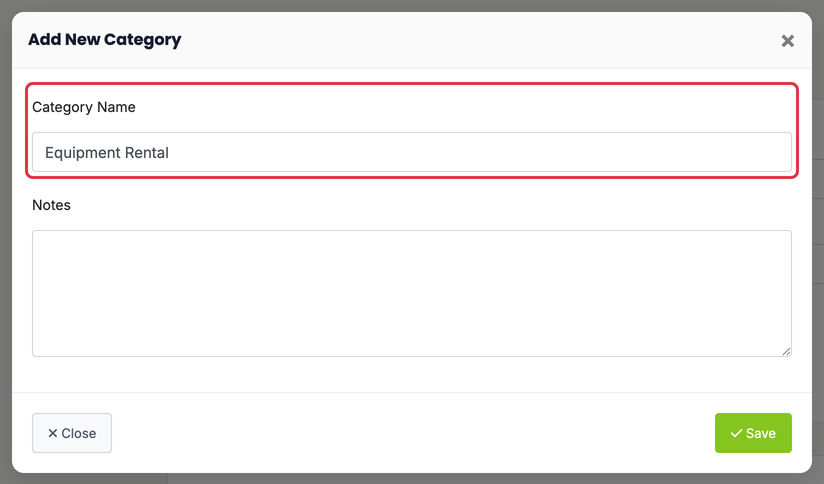
Then select which category this expense falls under. If you need to add a new category use the “+” button next to it.
The Date is set to today. Change it if the expense happened on another day.
It’s a single expense by default.
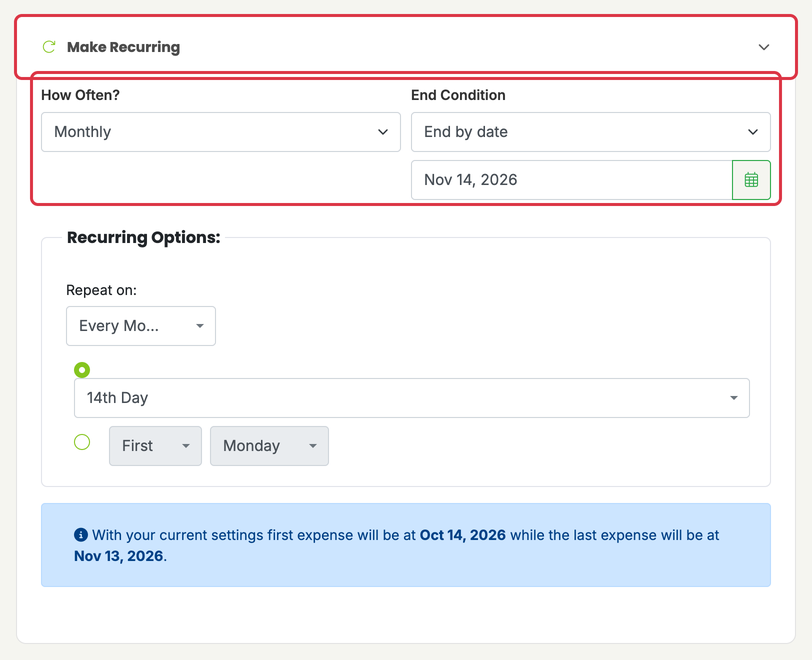
To make it recurring, open Make Recurring further down the form.
In this example, I chose the advertising category for Facebook ads. It will be a single expense.
When you open Make Recurring, more options appear so you can choose how often it repeats and when it ends.
Enter the Amount. To record tax separately, click Break down taxes.
Check Pay in full if it’s already paid, or enter the amount you’ve paid so far.
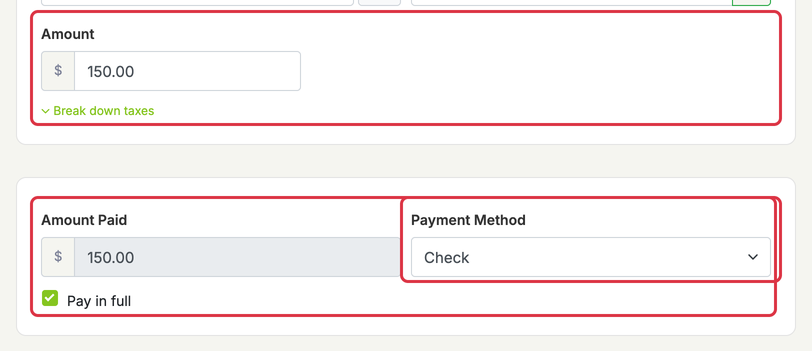
Select the payment method you used or will use to pay this expense.
Under Assign to, choose Customer, Equipment, Vendor / Supplier or Employee.
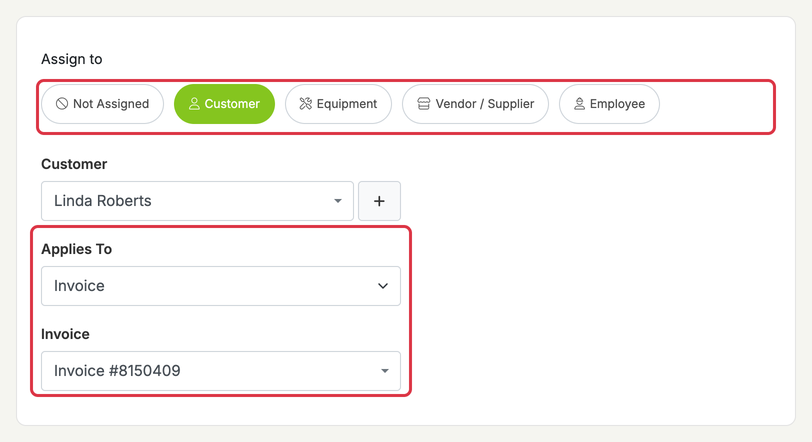
If you choose Customer, you will have more options to choose from.
Applies To lets you link it to just the customer, or to an asset, property, estimate or invoice.
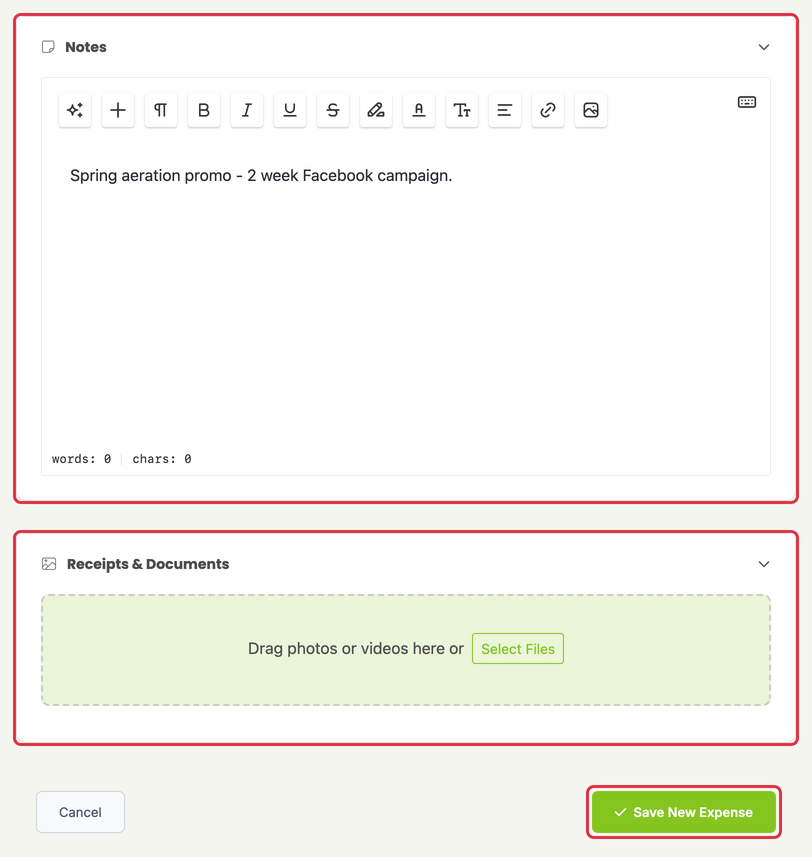
Add notes under Notes and receipts or photos under Receipts & Documents and then click the green “Save New Expense” button.
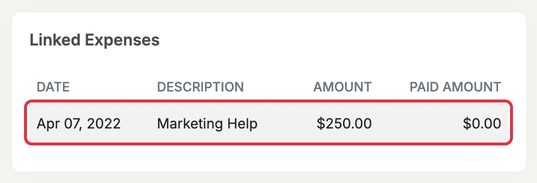
If you chose to tie this expense to a Customer’s Property you will see it listed with the Property it is linked to.
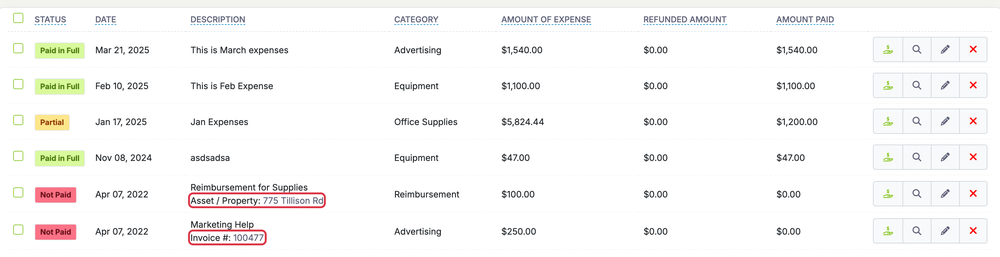
If you tied the expense to an invoice it will be listed with the invoice number.
You will also see any expenses linked to an invoice when viewing the invoice.
The customer will not be able to view this.